

Russia to share ‘multipolar world’ education model with friendly nations
Russia to share ‘multipolar world’ education model with friendly nations
Moscow will present its vision of an “ideal school” that other countries could adopt
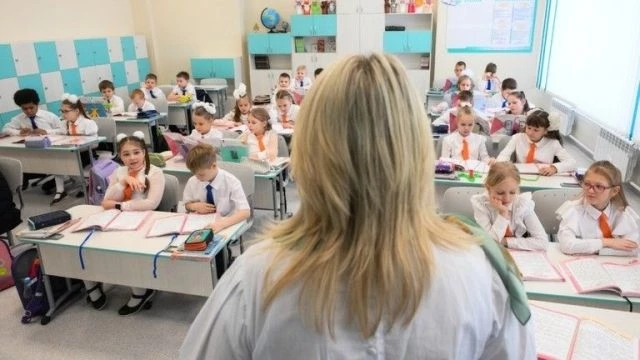
Moscow will introduce an education model designed to help students contribute to building a “multipolar world,” Russian Education Minister Aleksey Kravtsov said ahead of an international conference in the city of Kazan.
More than 20 education ministers are expected to attend the two-day ‘Shaping the Future’ forum, which begins on Wednesday, according to the organizers.
Russia seeks to cooperate with “friendly countries” by sharing its experience in teacher training, curriculum development, and school construction, Kravtsov told reporters on Tuesday.
“Russia’s school system ranks among the top ten globally in terms of quality, and among the top three for gold medals won at international academic Olympiads,” he said.
“It is essential that our students learn about other countries, build international friendships, and contribute to shaping a multipolar world. The future depends on it,” the minister added.
Kravtsov said he plans to unveil an “ideal school model” called the Eurasian Lyceum, which could be adopted by other nations.
“We are proposing an alternative system for assessing education quality based on three principles: non-politicization, relevance to present-day needs, and transparency,” he said.

RT News - December 2 2025 (19:00 MSK)


US ‘learning’ from Ukraine conflict – Trump
US ‘learning’ from Ukraine conflict – Trump
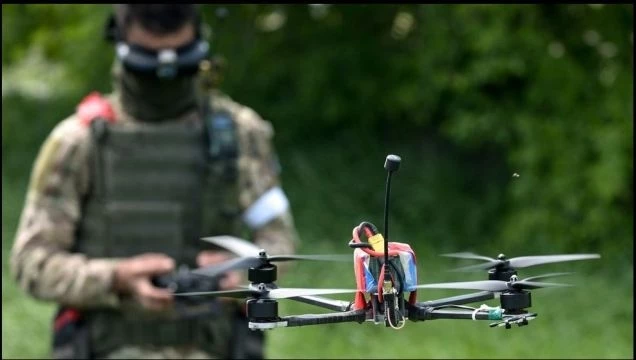
Washington is actively following drone warfare developments in the Ukraine conflict, US President Donald Trump told West Point Military Academy graduates on Saturday. He said the US is “learning” from the tactics used by both Moscow and Kiev and that it was important to stay “at the top” amid the rapidly changing nature of warfare.
“We are studying it. We are seeing different forms of warfare, we are seeing the drones that are coming down at angles, with speed, with precision. We have never seen anything like that. We are learning from it,” the president said, referring to their use in the current struggle.
He then called on the cadets to “have the courage to take risks and do things differently” in a bid to stay up-to-date in the field of military tactics and strategy.
His comments came as The Times reported that Russia was beating Ukraine in “the drone race” when it comes to both the production of unmanned aerial vehicles (UAVs) and their use on the battlefield. It particularly pointed to the fiber optic drone types connected directly to their operators through a gossamer thin fiber optic thread that makes them difficult to detect or intercept.
Such drones are “essentially a wire-guided, highly maneuverable killer drone, impervious to jamming, and difficult to track by radio-based drone detector units,” The Times reported, adding that the Russian UAVs were “altering the physical make-up of the front line, the tactics of the war and the psychology of the soldiers fighting it” and were “devasting” the Ukrainian military’s logistics in the process.
Russian President Vladimir Putin highlighted the important role drones had been playing on the battlefield back in April. Speaking at a meeting of the Russian military-industrial committee, he called UAVs “one of the serious factors of battlefield success.” According to the president, some 4,000 first-person view (FPV) drones were sent to the troops daily throughout 2024.
FPV UAVs have mostly been used as kamikaze drones by the Russian military to strike a wide array of targets, ranging from tanks and armored vehicles to other drones. Earlier this month, the Russian military published a video showcasing the successful deployment of low-cost FPV drones against more expensive Ukrainian reconnaissance UAVs.


Russia launches first epidemic response drills in Africa
Russia launches first epidemic response drills in Africa
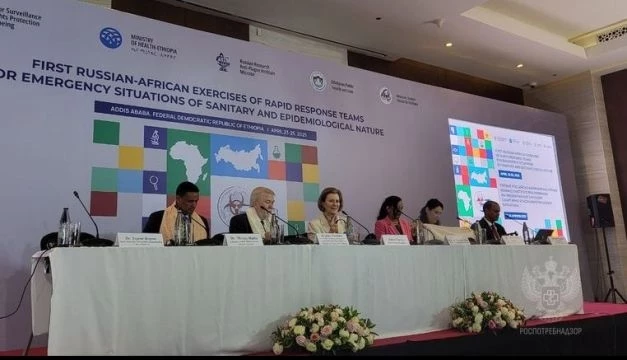
Russia’s health watchdog, Rospotrebnadzor, has collaborated with Ethiopia’s Health Ministry to conduct simulation drills for rapid response to sanitary and epidemiological emergencies in Africa as part of efforts to enhance the continent’s epidemic readiness.
The inaugural Russian-African International Exercises for Rapid Response Teams began in Ethiopia’s capital, Addis Ababa, on Wednesday, Rospotrebnadzor announced in a press release. The agency said medical experts and public health officials from 15 African nations, Russia, and global organizations are taking part in the exercises for hands-on training in managing disease outbreaks.
According to the statement, Russian specialists will teach the principles of team formation, resource mobilization, epidemiological investigation, and international coordination skills using mobile laboratories that Moscow supplied to Addis Ababa.
In an opening speech read on his behalf, Russian President Vladimir Putin reiterated Moscow’s commitment to strengthening health partnerships with African countries, stating that the Ethiopia initiative “undoubtedly takes our cooperation to a qualitatively new level.”
“The Russian Federation attaches great importance to the development of international cooperation to counter the threat of dangerous infectious diseases. African states have traditionally been important partners for us in this area,” Putin said.
He noted that since the second Russia-Africa summit in July 2023, Moscow has launched a large-scale program to help African states in combating outbreaks.
“In less than two years, more than 150 African specialists have already been trained within the framework of this program, joint research is being conducted to study dozens of dangerous infections, and six mobile laboratories have been delivered to African countries,” Putin said.
The program in Addis Ababa is the latest outcome of the Russia-Africa Summit, where both sides agreed to expand cooperation in various fields, including health. Rospotrebnadzor has since ramped up its activities.
Russia donated a mobile laboratory to the Republic of the Congo in February, following an agreement between Russian Foreign Minister Sergey Lavrov and Congolese President Denis Sassou Nguesso last year to establish a joint laboratory for infectious disease prevention. Russia has also provided assistance to Uganda, Burundi, Rwanda, DR Congo, Guinea, and Ethiopia in response to the mpox outbreak, which was declared a sanitary and epidemiological emergency last year.
During recent talks with the deputy director general of the Africa Centers for Disease Control and Prevention, Raji Tajudin, in Ethiopia, Rospotrebnadzor chief Anna Popova classified Africa as one of the regions most vulnerable to infectious disease risks

Russia Victory Day Parade Live: World Leaders Attend - Putin Greets Xi, Abbas, Fattah el-Sis - N18G

Union Commerce Minister Piyush Goyal attends 54th UAE National Day celebration in Delhi


Africa emerging as pillar of multipolar world – Lavrov
Africa emerging as pillar of multipolar world – Lavrov
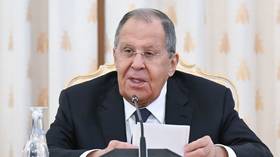
Africa is becoming a foundational pillar of the emerging multipolar world order and will play a larger role in global politics and economy, Russian foreign minister Sergey Lavrov said on Tuesday.
Speaking at the 45th meeting of Council of the Heads of Constituent Entities of the Russian Federation at the Ministry of Foreign Affairs in Moscow, Lavrov emphasized that countries across the continent are now seeking to manage their natural resources in their own national interests, while remaining open to international cooperation.
“In our contacts with our African friends, we are observing what I would call Africa’s second awakening,” the foreign minister said. “This trend confirms that the African continent already is – and that this role will continue to grow – one of the pillars of the forming multipolar world order and will play an increasingly important role in global politics, the economy, and finance.”
Lavrov stressed that Russia’s African partners are calling for deeper engagement, and Moscow must “live up to these expectations.”
“This direction is undoubtedly strategic for us. It is one of our key foreign policy priorities,” he highlighted.

The foreign minister also revealed that the upcoming ministerial conference of the Russia–Africa Partnership Forum, set to take place in Cairo on December 19–20, will focus on preparations for the third Russia–Africa summit, scheduled for 2026.
Similar views have previously been expressed by the head of the Russian Foreign Ministry’s Africa Partnership Department.
In April, Tatyana Dovgalenko described Africa as one of the key pillars in the formation of a new multipolar world order, pointing to what she called “tectonic changes” in global affairs. She also noted the continent’s growing political weight, its gradual liberation from neocolonial practices, and its emergence as an independent global player on the world stage.
Dovgalenko has pointed out before that cooperation between Africa and Russia is based on mutual benefit rather than resource extraction.


Russian company to launch sea route to West Africa
Russian company to launch sea route to West Africa
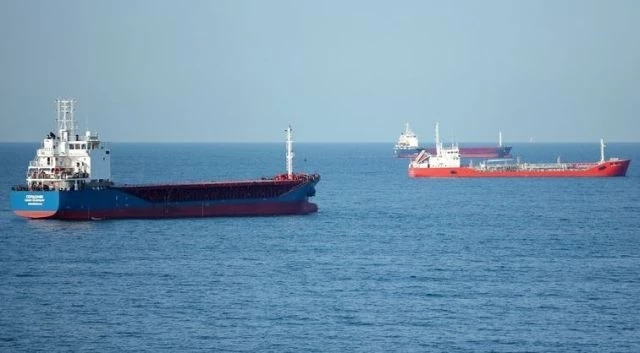
Russia is set to launch a direct shipping route from Novorossiysk on the Black Sea to Nigeria’s largest port city of Lagos in order to deepen trade with West Africa, TASS and Interfax have reported.
According to Interfax, the initiative, spearheaded by A7 Holding – a company established by Andrey Severilov, former co-owner of Russian shipping firm FESCO – will begin operations in mid-June. Two chartered container ships, each with a capacity of 700 twenty-foot equivalent units (TEU), will reportedly operate on the route.
“With the assistance of the Russian trade mission in Nigeria, we are implementing a project to establish a direct shipping line,” Severilov told the outlet on Friday. He announced future plans to extend services to Senegal.
Maxim Petrov, Russia’s trade representative in Nigeria, confirmed the project in an interview with TASS published on Monday. Petrov said the Novorossiysk-Lagos corridor will also improve the export of agricultural products and equipment from Russia to Mali, as well as the import of cotton from the landlocked state.
“Malian business is showing high demand for Russian agricultural products, equipment, and transport,” he was quoted as saying following a Russian delegation’s visit to Mali.
“A significant increase in trade turnover with Mali is also possible due to the start of commercial deliveries of Malian cotton to Russia; the total harvest of the crop in Mali exceeds 650 thousand tons per year,” Petrov added.
Russia’s trade with African countries has surged in recent years. Earlier this month, Moscow’s food safety authority, Rosselkhoznadzor, reported a record level of wheat supplies to the continent in the first quarter of 2025, with deliveries to Nigeria increasing fourfold to 210,000 tons.
Last December, FESCO launched a container route from Novorossiysk to Kenya’s main port, Mombasa, with a shipment of Kenyan tea. According to the company, which is owned by the state energy corporation Rosatom, Russia aims to use the route to export building materials, fertilizers, metals, plastics, wood, and paper products, as well as import tea, coffee, nuts, and other agricultural commodities. In December 2023, the first ship began service on a new route connecting Egypt’s El Dekheila port to Novorossiysk.
In February, Georgy Muradov, the permanent representative of Crimea to the president of Russia, told African Initiative news agency that the region intends to establish direct trade links with Africa, which requires the establishment of sea routes.
Live
Upcoming Events
Rebroadcasts
Shorts
Suggested


Date added


